



Climate Controlled Shipping Containers For Sale
In a world where maintaining quality is important, climate-controlled shipping containers and portable cold storage options provide a new way to move delicate items. These special containers control temperature and humidity, making them essential for industries such as food, pharmaceuticals, and other items that need specific temperatures. Look into the various options, what to think about before buying, and how to take care of them to make them last longer. Learn how these containers can completely change your shipping process.
Buy 8 Foot Climate Controlled Shipping Containers
| 8′ (ft) Container | External Dimensions: 8 ft (2.44 m) L x 7 ft 2 in (2.2 m) W x 7 ft 4 in (2.26 m) H |
Internal Dimensions: 7 ft 6 in (2.29 m) L x 6 ft 11 in (2.11 m) W x 6 ft 9 in (2.06 m) H |
Door Opening: 6 ft 10 in (2.1 m) W x 6 ft 4 in (1.95 m) H |
Cubic Volume: 351 ft3 (cubic ft) 9.95 m3 (cubic meters) |
Empty Weight: 2100 lbs. (950 kg) |
Load Capacity: 11,143 lbs. (5050 kg) |
Max Gross Weight: 13,243 lbs. (6000 kg) |
Uses: Storage, Housing, Retail, Agriculture, Emergency Shelters, Workshops, Shipping, Event structures
Average Cost: $1,600 to $4,800
BUY NOWBuy 10 Foot Climate Controlled Shipping Containers
| 10′ (ft) Container | External Dimensions: 9 ft 10 in (3 m) L x 8 ft (2.438 m) W x 8 ft 6 in (2.591 m) H |
Internal Dimensions: 9 ft 3 in (2.84 m) L x 7 ft 8 in (2.35 m) W x 7 ft 10 in (2.39 m) H |
Door Opening: 7 ft 8 in (2.34 m) W x 7 ft 5 in (2.28 m) H |
Cubic Volume: 561 ft3 (cubic ft) 15.1 m3 (cubic meters) |
Empty Weight: 2870 lbs. (1300 kg) |
Load Capacity: 19,530 lbs. (8860 kg) |
Max Gross Weight: 22,400 lbs. (10,160 kg) |
Uses: Storage, Housing, Offices, Retail, Agriculture, Equipment Storage, Workshops, Shipping, Pop-Up Shops
Average Cost: $1,700 to $4,970
BUY NOWBuy 20 Foot Climate Controlled Shipping Containers
| 20′ (ft) Container | External Dimensions: 19 ft 10.5 in (6.058 m) L x 8 ft (2.438 m) W x 8 ft 6 in (2.591 m) H |
Internal Dimensions: 19 ft 3 in (5.867 m) L x 7 ft 8 19⁄32 in (2.352 m) W x 7 ft 9 57⁄64 in (2.385 m) H |
Door Opening: 7 ft 8 1⁄8 in (2.340 m) W x 7 ft 5 3⁄4 in (2.280 m) H |
Cubic Volume: 1,169 ft3 (cubic ft) 33.1 m3 (cubic meters) |
Empty Weight: 4850 lbs. (2200 kg) |
Load Capacity: 61,289 lbs. (27,800 kg) |
Max Gross Weight: 66,139 lbs. (30,000 kg) |
Uses: Storage, Housing, Offices, Retail, Portable Classrooms, Agriculture, Equipment Storage, Workshops, Shipping, Emergency Shelter, Fitness Centers
Average Cost: $3,100 to $9,000
BUY NOWBuy 40 Foot Climate Controlled Shipping Containers
| 40′ (ft) Container | External Dimensions: 40 ft (12.192 m) L x 8 ft (2.438 m) W x 8 ft 6 in (2.591 m) H |
Internal Dimensions: 39 ft 5 45⁄64 in (12.032 m) L x 7 ft 8 19⁄32 in (2.352 m) W x 7 ft 9 57⁄64 in (2.385 m) H |
Door Opening: 7 ft 8 1⁄8 in (2.340 m) W x 7 ft 5 3⁄4 in (2.280 m) H |
Cubic Volume: 2,385 ft3 (cubic ft) 67.5 m3 (cubic meters) |
Empty Weight: 8380 lbs. (3800 kg) |
Load Capacity: 57,759 lbs. (26,199 kg) |
Max Gross Weight: 66,139 lbs. (30,000 kg) |
Uses: Storage, Offices, Retail, Portable Classrooms, Agriculture, Equipment Storage, Workshops, Shipping, Emergency Shelter
Average Cost: $3,300 to $10,800
BUY NOWBenefits of Climate Controlled Shipping Containers and Energy Efficient Containers
Shipping containers with temperature control provide exact temperature settings, which greatly cut down on spoilage and waste. This makes them ideal for transporting refrigerated goods.
Temperature Regulation and Preservation
Keeping the right temperature in climate-controlled shipping containers keeps products like medicines and perishable foods at the correct temperature limits.
Reefer containers, using current equipment from brands like Carrier and Thermo King, maintain temperatures precisely between -20 degreesC and +20 degreesC. These units use advanced refrigeration systems and real-time monitoring to keep temperature changes to a minimum.
For example, a study found that maintaining a stable temperature can reduce spoilage rates in fresh produce by up to 30%. These containers are often fitted with GPS and IoT sensors, providing continuous data on location and condition, further enhancing supply chain transparency.
This technology is necessary for protecting important shipments.
Humidity Control in Insulated Shipping Containers
Managing humidity is important in climate-controlled shipping containers to stop mold and bacteria that can damage delicate products.
To effectively manage humidity, consider using dehumidifiers which can reduce moisture levels by up to 50%. Alternatively, moisture-absorbing materials like silica gel or activated charcoal can help maintain a stable environment.
For instance, a 20-foot container filled with textiles might benefit from placing 10 pounds of silica gel within, potentially reducing spoilage rates by 30%. Regularly checking humidity with hygrometers helps maintain the best conditions for your cargo during transport.
Types of Climate Controlled Shipping Containers and Portable Refrigeration Units
Different climate-controlled shipping containers meet various shipping needs, providing the best conditions for different types of cargo.
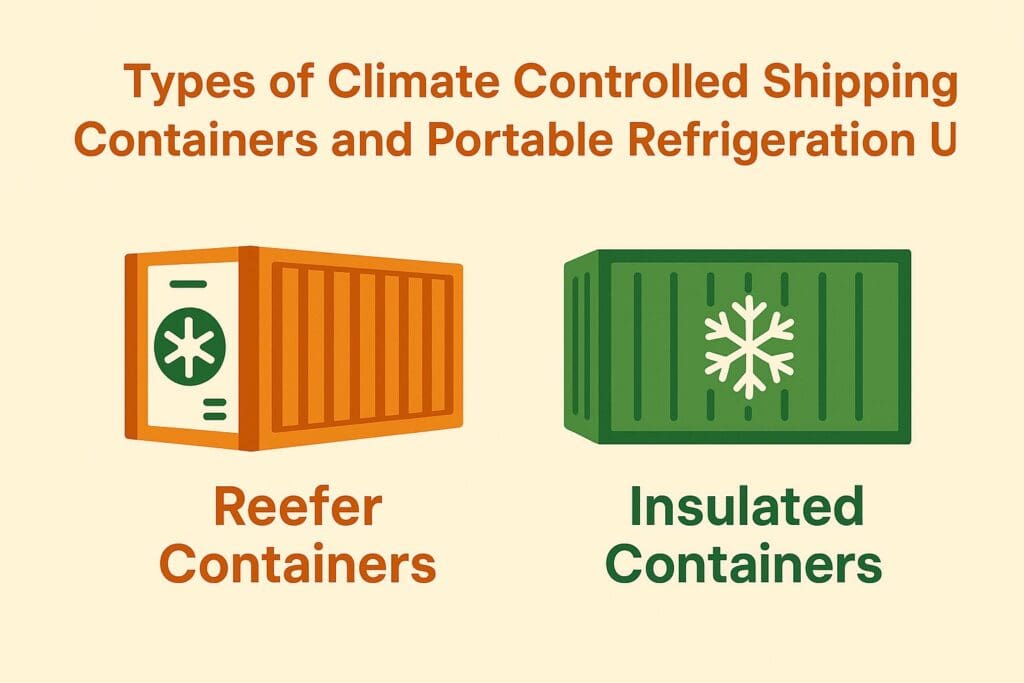
Reefer Containers
Reefer containers, or refrigerated containers, are designed to transport perishable goods, equipped with powerful refrigeration units that maintain strict temperature controls.
These containers usually work in temperatures from -25 degreesC to +25 degreesC, which makes them perfect for carrying fruits, vegetables, dairy items, and medicines.
For instance, they are widely used by companies like Maersk to ship goods across vast distances while ensuring they remain fresh. They often feature advanced monitoring systems that allow real-time tracking of temperature and humidity levels, thus preventing spoilage during transit.
The reliability of reefer containers has led many companies to include them in their logistics operations. This helps guarantee the on-time and secure delivery of products that need to be kept at specific temperatures.
Insulated Containers
Insulated containers keep items at a stable temperature without needing powered cooling. They are great for temporarily storing or moving items that need to stay at a certain temperature.
These containers typically use materials like polyurethane foam, polystyrene, or vacuum insulation, each offering varying degrees of thermal resistance.
Polyurethane foam has an R-value as high as 7.1, which makes it a great option for keeping perishable items cold.
In scenarios like shipping pharmaceuticals, insulated containers can outperform reefer containers, especially when the transport duration is under 24 hours.
The cost of insulated containers tends to be lower than running reefer units, providing a budget-friendly option for businesses needing reliable temperature control without the overhead of refrigeration.
Applications of Climate Controlled Shipping Containers in Cold Chain Logistics
Shipping containers with climate control are important in many fields.
They protect items that need specific environmental settings.

Storing Food and Drinks Using Refrigerated Shipping Containers
Refrigerated containers in the food and beverage industry protect perishable items during transport, ensuring they stay fresh from the farm to the table.
These containers use modern insulation and cooling systems to control temperatures. For example, transporting meats often requires maintaining a strict temperature of 0-4 degreesC to prevent spoilage, while fruits and vegetables typically thrive between 1-12 degreesC.
Using tools like sensor tracking, companies can monitor real-time temperature data, adjusting conditions as needed during transit. Companies like Thermo King supply dependable refrigeration units, enabling logistics managers to keep their cargo fresh and safe for consumption.
Pharmaceuticals and Medical Supplies in Temperature Controlled Storage
Medicines need exact temperature management during transport; climate-controlled shipping containers are necessary to keep the products effective.
To meet FDA rules, temperature monitoring technologies are very important.
These include data loggers, which track temperature changes throughout transit, and real-time monitoring systems that send alerts for any deviations.
Utilizing insulated and temperature-regulated containers, like those from Pelican BioThermal, can help maintain the required 2-8 degreesC range.
It’s essential to perform thorough checks before shipping, ensuring that all equipment is calibrated correctly and that temperature data is logged for traceability.
Implementing these practices can significantly mitigate risks associated with temperature excursions.
Factors to Consider When Buying Shipping Containers and Custom Shipping Containers
When buying climate-controlled shipping containers, consider factors like size and energy use to find the best option for your logistics needs.
Size and Capacity of Cargo Containers for Sale
Selecting the right size and capacity for climate-controlled shipping containers is important to improve transport efficiency and reduce expenses, considering shipping container dimensions and configurations.
Containers typically come in standard sizes of 20ft and 40ft. To calculate required capacity, measure your cargo’s volume (in cubic feet) and weight (in pounds).
For example, a 20ft container holds approximately 1,170 cubic feet, supporting a weight limit of about 48,000 pounds. Conversely, a 40ft container accommodates roughly 2,390 cubic feet and a weight limit of 67,200 pounds.
Make sure your cargo size meets these limits to avoid extra fees or wasted space. Comparing your cargo details with these standards will simplify the shipping process.
Energy Efficiency in Modular Cold Storage and Insulated Transport Containers
Energy efficiency is an important factor when choosing climate-controlled shipping containers, as it greatly affects running costs.
Knowing what energy efficiency ratings like Energy Efficiency Ratio (EER) and Coefficient of Performance (COP) mean is important. For example, a shipping container with an EER of 12 consumes less energy compared to one with an EER of 8 for the same cooling output.
This can result in annual savings of hundreds of dollars, especially for large operations. Using containers equipped with solar panels and systems with high COP can greatly reduce the need for electricity from the grid, offering an environmentally friendly choice in places where electricity costs a lot.
Where to Purchase Climate Controlled Shipping Containers and Portable Storage Solutions
Finding reputable shipping container suppliers for climate controlled shipping containers is essential for ensuring quality and compliance with industry standards.
Start by considering recognized suppliers like Container Technology, Seaco Global, and Triton International.
Evaluate suppliers based on key attributes such as warranties, which should cover potential defects, and service agreements that outline maintenance and support.
Inspect their inventory for features like insulation quality and temperature control systems.
Contact suppliers directly to discuss customization options and shipping logistics, ensuring they meet your specific storage needs while adhering to local regulatory requirements.
Cost and Financing Options for Shipping Container Sales and Rentals
The cost of climate controlled shipping containers varies widely based on features and specifications, and financing options can facilitate the purchase of shipping container investments.
New climate-controlled shipping containers typically range from $15,000 to $25,000, while used models start around $10,000.
Leasing options can offer lower upfront costs, with monthly payments between $250 and $500. For instance, financing a $10,000 container over five years at an interest rate of 5% would result in monthly payments of about $190.
Make sure to check both used and new containers. Look at warranty details, condition, and any extra costs such as delivery.
Maintenance and Care Tips for Shipping Container Durability and Safety
Regular maintenance of climate controlled shipping containers is essential for ensuring longevity and optimal performance, considering shipping container maintenance standards.
To maintain your containers effectively, follow these key tips:
- Regularly check for any damage or deterioration.
- Clean the interior and exterior using appropriate detergents.
- Make sure the temperature controls are working properly.
Use devices like infrared thermometers to check internal temperatures and maintain the best conditions. Check seals and gaskets for any damage to stop air leaks, and regularly inspect ventilation systems to keep air moving freely.
Checking your container every six months can spot issues early and extend its lifespan.
Leave a Reply