


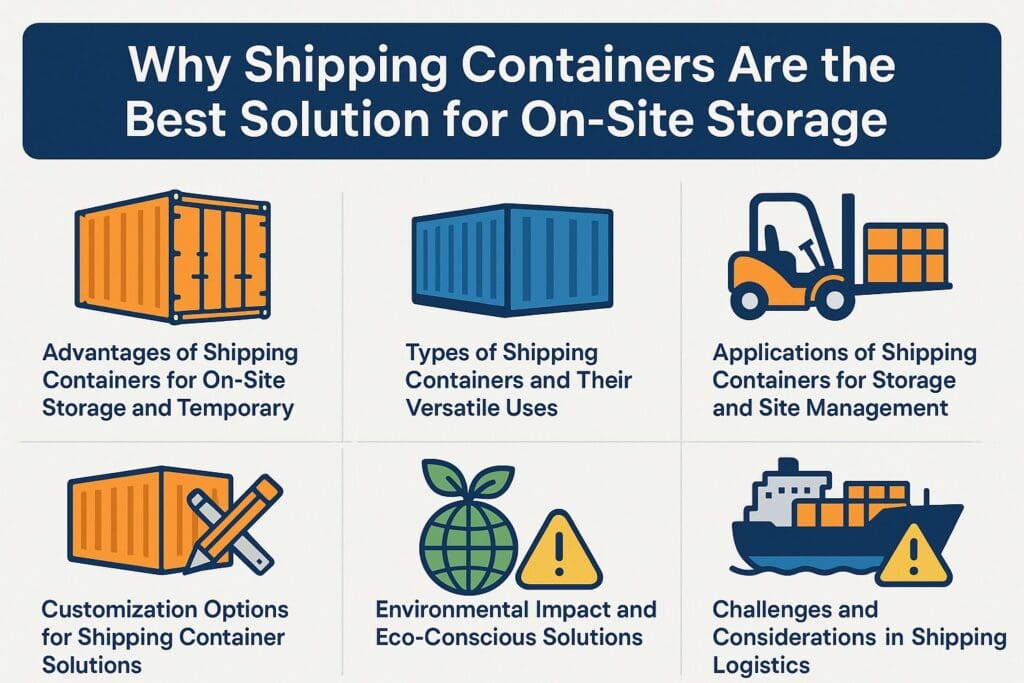
Why Shipping Containers Are the Best Solution for On-Site Storage
Need extra portable storage without the hassle? Shipping containers offer a practical, secure solution for on-site storage and industrial storage. These strong, affordable, and easy-to-move containers are suitable for saving space and creating flexible and modular setups for any requirement. Learn about their background, varieties, and how they can significantly improve your storage with practical and creative storage options. Plus, find options to change shipping containers to meet your specific needs. Learn why shipping containers, with their eco-friendly and flexible design, could be what you need!
Definition and Purpose
Shipping containers are standardized cargo containers designed for transporting goods via multiple modes of transport, ensuring efficiency and security.
The most common shipping container sizes are 20ft and 40ft, governed by ISO standards to facilitate international logistics.
A 20ft container typically measures 20′ long, 8′ wide, and 8.5′ high, with a volume of about 1,165 cubic feet. In contrast, the 40ft container offers double the length at 40′ and maintains the same width and height, providing approximately 2,385 cubic feet of space.
These standards make sure different transport systems work well together, simplifying loading, unloading, and storage, which helps global trade run smoothly.
History of Shipping Containers
The shipping container, invented in the 1950s, improved logistics by standardizing cargo transport, which greatly reduced loading times and costs.
Malcolm McLean, a trucker who became a shipping industry leader, came up with the idea in 1956 with significant innovations like the ‘Malcolm McLean Box.’ This standardized container system made cargo transfers more efficient, moving from individual cargo handling to using containers.
By 1966, nearly 90% of cargo was shipped in containers, leading to a 90% reduction in shipping costs and significant efficiency improvements.
Key milestones include:
- The first container ship voyage in 1956
- The creation of the International Organization for Standardization (ISO) standards in 1968 helped increase global trade.
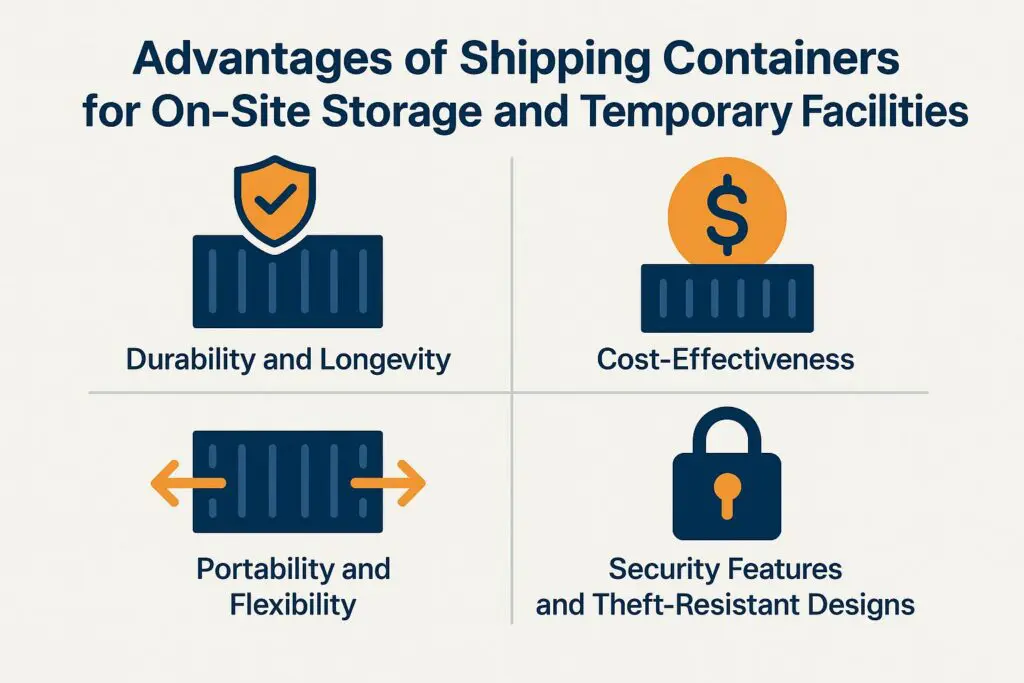
Advantages of Shipping Containers for On-Site Storage and Temporary Facilities
Shipping containers have many benefits, which makes them a popular option for site-specific solutions and storage at different work sites. If interested in exploring these advantages in more detail, consider how renting a container can enhance your storage capabilities by reading our article on the Top 5 Benefits of Renting a Shipping Container for Your Storage Needs.
Durability and Longevity
Constructed from corten steel, these rugged, marine-grade shipping containers are designed to withstand harsh weather conditions, boasting a lifespan of 25 years or more.
Their durability is evident in real-world applications, such as in hurricane-prone regions like Florida, where many containers are repurposed for storage and even housing.
These containers can resist high winds and flood conditions, especially when properly anchored. For instance, converting a shipping container into a home in the Caribbean involves reinforcing it with additional steel supports and elevating it on concrete blocks to mitigate flood damage.
These changes highlight how shipping containers can be used in different ways and withstand tough conditions.
Cost-Effectiveness and Shipping Container Prices
With used shipping container prices between $1,500 and $5,000, they offer a cheaper storage option compared to traditional storage units that typically cost $100 per month.
Using a traditional storage unit for a year costs around $1,200, so shipping containers are a cheaper option if you need storage for a long time.
Shipping containers can serve multiple functions, such as on-site storage or as a converted workspace, increasing their ROI.
When comparing costs, factor in maintenance; while containers require minimal upkeep, storage units may have insurance fees.
In the long run, buying a container for use over 12 months usually saves money.
Portability and Flexibility in Urban Storage
Shipping containers can be easily transported and relocated using standard freight trucks, offering unmatched flexibility for changing storage needs.
The logistics of container transport typically involve various cost factors, including fuel and distance, averaging around $1 to $3 per mile.
Industries such as retail and construction greatly benefit from this flexibility, as they can quickly adjust to demand fluctuations. For instance, a retail chain may relocate containers to seasonal locations, while a construction firm could mount immediate projects with on-site storage.
Good infrastructure, such as well-designed loading docks and access paths, makes container handling smooth and improves how operations run.
Security Features and Theft-Resistant Designs
Shipping containers have lockable doors and are often strengthened with extra security features, offering safe storage choices for important items.
To make your property safer, use different kinds of locks. Padlocks offer basic protection, while bolt seals are tamper-evident and signify unauthorized access.
In a 2021 study, containers secured with both mechanisms reduced theft incidents by 40%. Case studies reveal that construction sites using high-security containers have effectively safeguarded equipment worth millions.
Using GPS tracking devices can improve security by giving real-time location information and warnings. By following these tips, you can make your stored items much safer.
Types of Shipping Containers and Their Various Uses
There are different types of shipping containers, each designed for particular transportation and storage purposes, providing users with flexibility. If you’re curious about the options available, you might find our guide on the types of Conex boxes and what you need to know particularly insightful.

Standard and Stackable Containers
Standard containers, available in 20ft and 40ft sizes, are the most common type used for shipping goods across land and sea.
These containers typically measure 20ft (6.06m) long and 8ft (2.44m) wide, holding approximately 28,800 liters, while the 40ft variant offers double the length, accommodating up to 67,200 liters.
With a maximum weight capacity of up to 30,480kg, they are particularly favored in international shipping, with their standardization allowing for efficient stacking and transport.
In fact, about 90% of global trade involves containerized cargo, underlining their importance in logistical operations across the world.
Refrigerated and Climate-Controlled Containers
Reefer containers, also called refrigerated containers, keep temperatures from -30 degreesC to +30 degreesC, which is perfect for moving items that can spoil.
These containers are equipped with a power supply unit, typically requiring a standard 20-60 Amps, depending on the model and temperature setting.
Frequent shipments include seafood, medicines, and dairy products, which require careful temperature management to keep them fresh and safe.
Renting a refrigerated container typically costs between $3,000 and $5,000 per month, depending on the size and duration of the rental.
Companies wanting to keep their supply chain running smoothly can easily add these containers to their current transport systems for dependable service.
Open-Top Containers for Heavy Equipment Storage
Open-top containers are designed with removable tops, providing an efficient solution for transporting oversized cargo that cannot fit in standard containers.
These containers typically measure 20 or 40 feet in length and have a height of 8.5 feet, while the sides are around 2.5 feet tall.
They are ideal for carrying heavy machinery, construction materials, or scrap metal, which are often too bulky for standard containers.
Depending on your location, rental costs can range from $150 to $300 per month. Availability tends to be high in major ports but may vary in rural areas.
Always verify size and weight restrictions to fit your cargo needs.
Applications of Shipping Containers for Storage and Site Management
Shipping containers are used in many industries for storage, offering a practical way to fulfill different storage needs. To explore how these containers can be creatively repurposed for various applications and enhance their functionality, consider our framework for transforming spaces with innovative shipping container modification ideas.
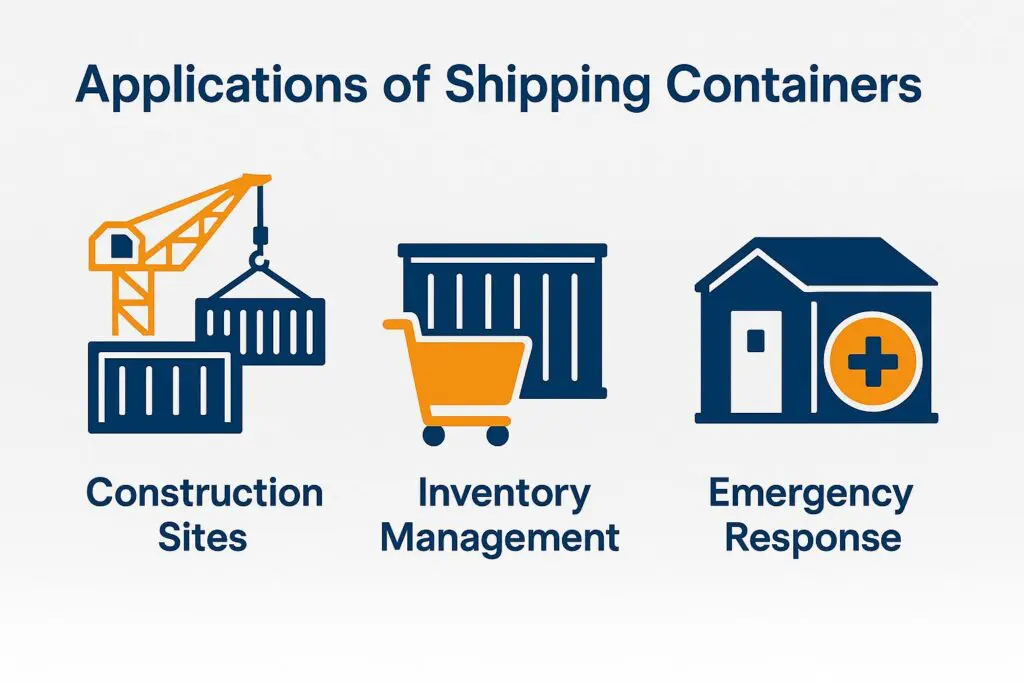
Construction Sites and Construction Efficiency
Construction sites frequently use shipping containers for on-site storage of tools and materials, enhancing security and organization.
You can rent these containers for $75 to $150 each month, providing an affordable option for temporary projects.
To maximize efficiency, consider organizing your container with clearly labeled shelves and bins for tools, ensuring workers can easily find what they need.
Sturdy locks and strong sides help keep important gear safe from theft. Using a check-in/check-out log will improve organization and responsibility by recording the tools and materials entering and leaving the container.
Retail, Inventory Management, and Operational Efficiency
Retail stores use shipping containers to handle their inventory easily, allowing quick access and organization of their products.
Many retailers, like Home Depot and Costco, have integrated shipping containers into their overflow inventory strategy. For instance, Home Depot uses containers for seasonal items, enabling quick access during peak times while maintaining store aesthetics.
To put this plan into action, you need to look at the space you have and how things are set up. Outdoor spots can hold these containers and won’t bother your customers as they move around.
Inventory management software helps keep track of stock when using containers. This software provides up-to-date information on available products and reduces the risk of having too much stock.
Emergency Response, Disaster Relief, and Temporary Housing
During emergencies, shipping containers are reused to store supplies and equipment temporarily, allowing for fast use.
These containers provide secure storage for food, water, and medical supplies. For example, during Hurricane Harvey in 2017, organizations in Houston quickly used containers to store important supplies.
Logistics teams frequently use cranes and trucks to move these containers to important locations, allowing for quick setup where necessary. The containers can be modified into makeshift medical facilities or shelters, showing their versatility.
Tools like GIS mapping systems are used to plan the optimal placement of these containers to maximize accessibility for affected communities.
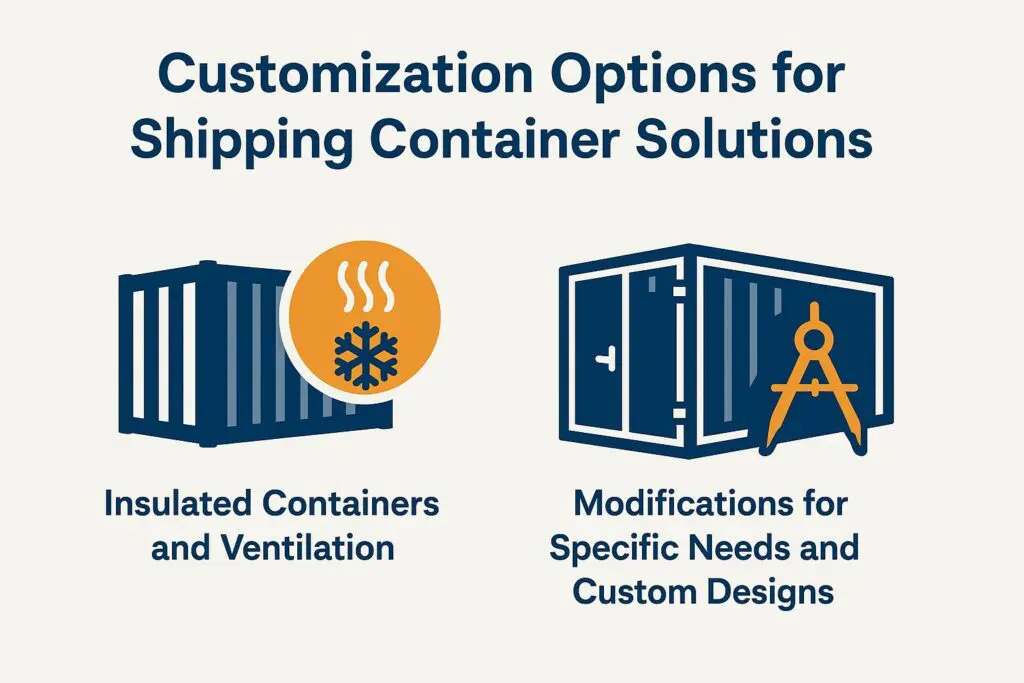
Customization Options for Shipping Container Solutions
Shipping containers can be altered for specific needs, ranging from basic modifications to major transformations for various functions, making them perfect for storing materials on construction sites and for use as mobile offices. For those looking to dive deeper into creative possibilities, one of our most insightful showcases explores imaginative conversion ideas that push the boundaries of conventional use.
Insulated Containers and Ventilation
Adding insulation to shipping containers helps maintain a stable temperature, which is important for delicate products and improves their durability as mobile storage solutions.
Good ventilation can help lower humidity, ensuring weather-resistant qualities and effective risk management.
For insulation, consider spray foam, which offers an R-value of around 6.5 per inch, effectively sealing gaps and enhancing thermal performance for long-term storage solutions.
Rigid foam panels are another option, providing high insulation at a lower profile but requiring more effort to install.
To improve ventilation, place vents in key areas to increase airflow, and use exhaust fans to remove extra moisture.
Budget estimates indicate spray foam insulation could cost between $1,000 to $2,500, depending on the container size, while fan installation can range from $100 to $600.
Modifications for Specific Needs and Custom Designs
Containers can be changed for particular uses, such as office spaces, workshops, or living areas, highlighting their ability to be used in many ways as strong materials for reused containers.
To change a container, begin with the most important adjustments.
For office spaces, you might install insulated windows ($1,000 each) for natural light and a comfortable environment. For workshops, consider adding electrical systems costing around $2,000-$5,000 to support tools.
Plumbing for living quarters can range from $3,000-$6,000, allowing for a bathroom and kitchen setup. Interior finishes, whether basic or luxurious, typically add between $5,000 and $20,000, depending on materials and design choices.
By planning these modifications, you can create a functional and inviting space.
Environmental Impact and Eco-Conscious Solutions
Using shipping containers supports eco-friendly practices by recycling and reusing them, which cuts down on waste in building and storage industries. For an extensive analysis of this trend, our comprehensive study on the environmental impact of shipping containers provides deeper insights into their benefits and challenges.
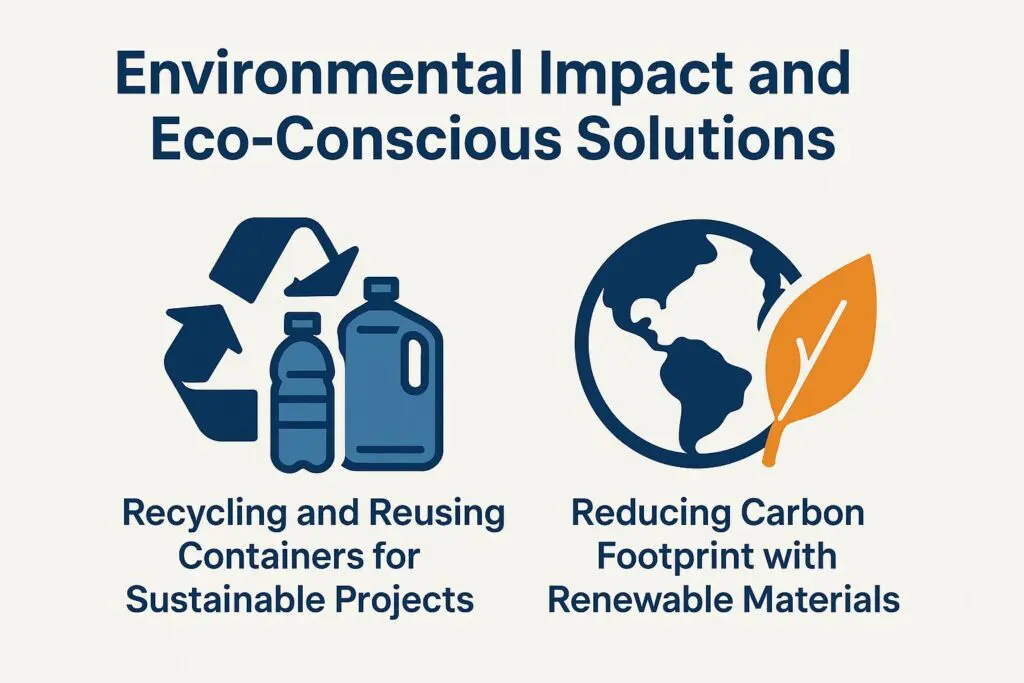
Recycling and Reusing Containers for Sustainable Projects
Recycling shipping containers minimizes waste while providing affordable building materials for various projects, from homes to businesses, encouraging significant waste reduction and sustainability.
Using shipping containers again helps the environment by cutting down on building waste. Using one shipping container can lower material costs by up to 30% compared to traditional construction methods, making it a practical option for budget-conscious projects.
Statistics show that in 2021, about 98% of containers were recycled, indicating a growing trend towards circular economies in construction. Notably, companies like Container Homes USA offer designs and plans for container homes, effectively merging affordability with eco-friendliness.
This approach reuses materials and helps save energy while lowering carbon emissions.
Reducing Carbon Footprint with Renewable Materials
Utilizing shipping containers for storage can significantly reduce the carbon footprint by promoting local sourcing and minimizing the need for new materials, aligning with eco-conscious solutions and urban development goals.
These containers can be repurposed into various sustainable projects, such as housing developments, community gardens, or pop-up shops.
For example, the 596 Acres project in New York City has changed unused land into lively community areas, using shipping containers as environmentally friendly centers.
Companies like Stackhouse in Texas have created modular offices from repurposed containers, reducing waste while maintaining a unique aesthetic.
Using shipping containers, communities can encourage new ideas, help local businesses, and greatly reduce their impact on the environment.
Challenges and Considerations in Shipping Logistics
Although shipping containers provide many advantages, users need to handle different challenges and factors to use them effectively.
Regulatory Compliance and Facility Management
Users must follow local building rules and zoning laws when using shipping containers for storage or homes.
In cities like San Francisco and New York, strict regulations govern the use of shipping containers. For instance, San Francisco mandates a structural engineer’s review for any container used as a dwelling, while New York City requires a permit for any container placed on public property.
To deal with these regulations, users should check with their local building departments or zoning boards to learn about required permits and safety codes. Tools like the International Code Council (ICC) online resources can help verify local requirements and simplify the permitting process.
Maintenance and Upkeep for Shipping Container Uses
Regular maintenance of shipping containers is essential to extend their lifespan and shield them from weather damage.
Check shipping containers every six months to maintain their condition and make sure space is used well and the site remains secure for commercial storage.
Look for rust, structural damage, or issues with seals and doors.
For repairs, you’ll often need basic tools like a wrench set and a power sander for rust removal. Costs vary, but budgeting around $200 annually for paint and sealants can help protect against weathering.
Consider using a sealant like Rust-Oleum to prevent moisture from entering, and paint it with a weatherproof coating every few years to increase its durability and attractiveness for short-term storage or shipping container rentals.
About the Author
Written by Steve Holland, a Duke University graduate with a Master’s in Architecture. Steve is the owner of Tuff Shipping Containers, a leading container company based in North Carolina. With over 17 years of industry experience, he also serves as a contributing editor for the Tuff Shipping Containers Blog, where he shares expert insights on cold storage, custom builds, and industrial container solutions.
Leave a Reply