



How Can Contractors Cut Costs on Temporary Jobsite Structures?
Every contractor understands that jobsite structures can quickly use up funds. But what if you could trim those costs significantly? Knowing how to control costs for temporary buildings is necessary for maintaining your budget. From exploring material choices to innovative design strategies, this guide dives into practical ways you can save money while maintaining efficiency. Want to learn ways to reduce expenses in your projects? Let’s get started.
Importance of Cost Management
Managing costs effectively can lead to a savings of up to 15% on project budgets, directly impacting a contractor’s profitability.
Cost overruns are a major issue in construction, with studies showing that 70% of projects exceed their budget. This reduces profits and can slow down project schedules, leading to more financial pressure.
To solve this problem, regularly check your budget and use tools like Microsoft Excel or industry-specific programs like Procore. Establish strict change order protocols and maintain transparent communication with stakeholders to identify potential overruns early.
These strategies can increase financial control and make the project more feasible.
Overview of Temporary Jobsite Structures and Contractor Efficiency
Temporary jobsite structures, like portable offices and storage containers, are integral to project efficiency, reducing setup time by as much as 50% in multi-phase projects.
These buildings are designed to meet the specific requirements of the worksite. Portable offices provide a designated space for meetings and administration, enhancing communication among teams.
Storage containers keep tools and materials secure and well-organized, preventing costly delays. Temporary restrooms and break areas promote worker comfort and productivity.
To work more effectively, make a plan that positions these structures to help the workflow and access needs. Use site layout rules and worksite organization methods, so every team member can easily reach the needed resources.
Temporary Jobsite Structures Explained
Temporary jobsite structures range from simple storage units to detailed modular offices, each serving particular functions on-site. In many cases, these structures are modified shipping containers (our creative shipping container modification ideas illustrate how versatile they can be).
Types of Structures
Common types of temporary jobsite structures are modular offices, portable restrooms, and secure storage units, each designed to suit specific project requirements.
Modular offices, averaging $2,500 per month, provide a comfortable workspace with climate control and electricity, essential for project managers and teams.
Portable restrooms, typically costing between $150 and $300 each, offer necessary sanitation facilities on-site.
Secure storage units, ranging from $200 to $600 monthly depending on size, protect tools and materials from theft and weather damage.
When setting up a work site, think about how long the project will last and what specific needs you have to choose the best mix of buildings that improve productivity and meet rules.
Common Uses in Construction
Temporary buildings are important in construction, commonly used for site offices, storing materials, and providing facilities for workers, which improve the running of the site and adhere to building regulations.
For example, using modular site offices can make it easier for teams to talk to each other and manage projects better, enhancing workforce collaboration.
Lightweight storage containers enable safe, organized material handling, reducing time spent searching for tools or supplies.
Temporary shelters for workers, such as portable restrooms and rest areas, improve comfort and morale, resulting in higher productivity.
Implementing these structures requires assessing site needs and selecting durable, weather-resistant options.
Putting money into top-notch temporary solutions improves workflow and project schedules in the long run, ensuring durability and compliance with zoning regulations.
Cost Factors in Temporary Structures

Knowing the different expenses, like materials and labor, is important for planning the budget for temporary buildings. These costs can make up as much as 30% of total project spending.
Material Costs
Material costs for temporary structures typically range from $1,000 to $5,000, depending on durability and size, impacting overall project budgets significantly.
To choose materials and lower expenses, think about using modular panels made from plywood or steel. These options offer flexibility and are more affordable, contributing to material savings and construction costs management.
For instance, plywood panels can be sourced for about $20 each, while steel alternatives may start at $50, but last longer. Repurposing materials from previous projects, such as metal frames or tarps, can further cut expenses.
Always compare supplier prices and assess your project’s specific needs-sometimes, investing slightly more in durable materials can yield greater savings in the long run.
Labor Costs
Labor costs for setting up temporary structures can average around $50/hour, consuming about 20% of the total budget on installation and maintenance, impacting workforce allocation and site management efficiency.
To minimize these expenses, consider implementing a detailed scheduling system.
Use project management tools like Trello or Asana to improve workforce scheduling, ensuring workers are effectively utilized during peak times. Teach workers different skills so they can handle various jobs. For example, a general laborer could help with simple maintenance work.
Plan your setup during off-peak seasons when labor rates might be lower, potentially saving up to 15% on overall costs.
Maintenance and Upkeep
Ongoing maintenance of temporary structures can incur costs of up to $500/month, which, if overlooked, can lead to increased project overhead.
To effectively manage these costs, implement a preventive maintenance schedule. Checking your equipment monthly can catch small problems early and prevent them from becoming big ones, which saves money.
Use a maintenance checklist app to keep track of tasks like checking the roof or ensuring the foundation is stable. Consider investing in weather-resistant materials and coverings to prolong the lifespan of your structure.
Train staff in basic upkeep procedures, which can reduce reliance on external contractors and lower overall expenses.
Strategies for Cost Reduction
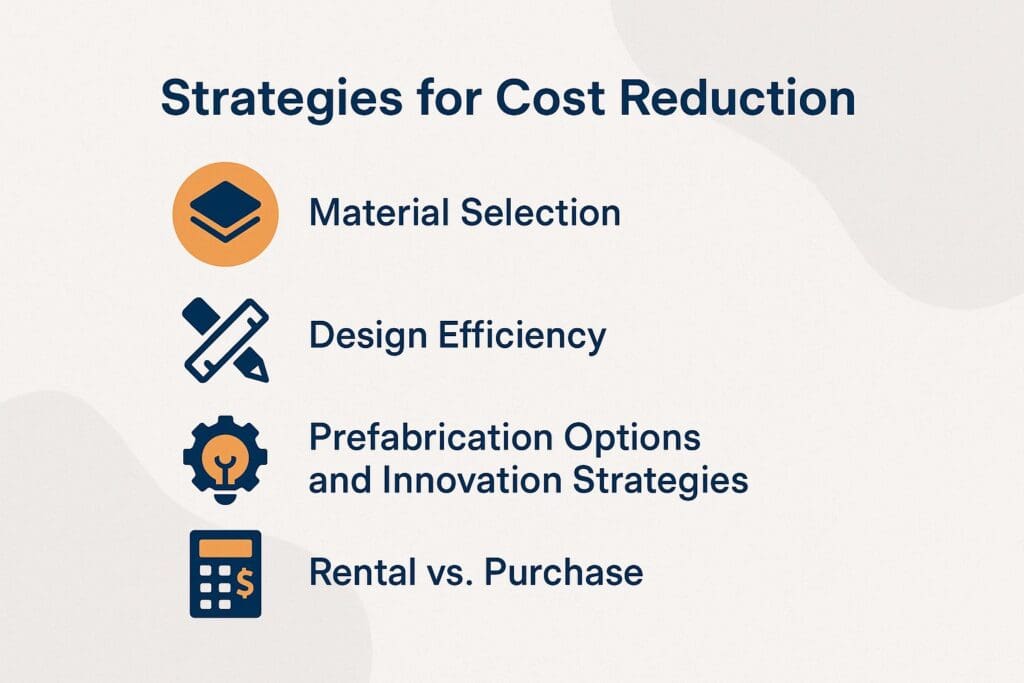
Using specific plans can cut costs related to temporary buildings by up to 20%, resulting in large savings throughout the project duration and improving cash flow management. This approach can be further optimized by selecting the right materials, and our comparison of different materials for shipping container manufacturing offers insights into material choices that can influence cost efficiency.
Material Selection
Choosing the right materials, such as lightweight aluminum over steel, can reduce costs by 15-20% while maintaining structural integrity and meeting safety standards.
When selecting materials for temporary structures, consider options like plywood for flooring and corrugated plastic for roofing, which are both economical and easy to assemble.
For instance, using lightweight aluminum framing instead of heavier steel can significantly lower transportation costs and ease setup. Sourcing from local suppliers reduces shipping expenses while supporting the community.
Always analyze storage and reuse potential; for example, PVC pipes can serve multiple purposes in various projects. A thorough comparison will yield the best balance of cost and function.
Design Efficiency
Using software like AutoCAD to improve designs can reduce material waste and project costs by 10%.
Using design software reduces waste and improves efficiency. For example, using AutoCAD’s tools like layering and 3D modeling helps in accurate material calculations.
Using tools like SketchUp for visualization can simplify the feedback process and reduce the time spent on revisions. Integrating project management tools like Trello can help track resources and schedules, further reducing costs.
Implementing these strategies collectively can yield significant savings and improve project outcomes in temporary structures.
Prefabrication Options and Innovation Strategies
Utilizing prefabricated structures can reduce onsite labor costs by as much as 30% and expedite the construction process, leading to faster project completion.
For instance, a study from the UK showcased a temporary medical facility constructed in just six weeks, utilizing modular prefabrication, compared to the typical twelve-week timeframe.
Companies like Katerra lead in this field, providing a full range of services from design to completion, reducing costs compared to standard approaches.
By using Building Information Modeling (BIM), they achieve accuracy in offsite manufacturing, cutting down on material waste and improving efficiency.
This method reduces costs and saves time, so many businesses use it.
Rental vs. Purchase
Renting temporary structures can save contractors up to 50% compared to purchasing, especially for short-term projects with limited duration, allowing for better vendor negotiation and leasing agreements.
This method lowers starting costs and allows for changes. For instance, a construction site needing a temporary office for six months can rent a modular building for around $500 per month, compared to a $20,000 purchase.
Renting allows contractors to avoid maintenance expenses, as companies typically handle repairs. Projects like festivals or sports events can also benefit, easily adjusting the size of the structure as attendance fluctuates.
Renting often makes good financial sense when you need a place for a short time.
Innovative Solutions
New methods are encouraging the use of modular designs and environmentally friendly materials, which cut down on waste and make building projects run more smoothly. Worth exploring: The Hidden Costs and Benefits of Repurposing Shipping Containers as these projects often involve repurposed materials that align with sustainability goals.
Modular Structures
Modular structures can be assembled in less than half the time of traditional builds, providing substantial time and cost savings, improving project timelines and delivery methods.
For instance, a recent project in Austin, Texas, demonstrated these advantages by completing a modular office space within six weeks, compared to the usual 12 months for a conventional build. This showcases significant improvements in construction timelines and operational efficiency.
The company used off-site construction methods, which cut labor costs by 20%. This approach also reduced overhead expenses and improved jobsite logistics. Tools like BIM (Building Information Modeling) were essential for accurate planning and teamwork before construction started. BIM also improves how technology works together and how involved parties participate.
Projects often succeed when suppliers deliver parts on time, which helps keep things running smoothly. Good supply chain management guarantees on-time delivery and cuts down transportation expenses.
Rethink Traditional Jobsite Trailers
Jobsite trailers are often the go-to, but they aren’t always the most cost-effective. Between rental fees, delivery, setup, and utilities, costs add up quickly. Contractors looking to save should compare trailer pricing against alternative solutions to ensure they’re getting the best value for the length of their project.
Consider Shipping Containers as an Alternative
One of the most overlooked cost-saving options is the shipping container. Repurposed containers are sturdy, secure, and easy to transport. They can be customized with doors, windows, insulation, and even electrical hookups at a fraction of the cost of a traditional trailer.
Because they’re built from steel, they also double as secure storage for tools and materials—meaning contractors don’t have to rent a separate storage unit. This combination of office and storage in one unit can significantly cut costs on site.
Eco-Friendly Materials
Incorporating eco-friendly materials, such as bamboo and recycled steel, can reduce construction waste by over 30%, promoting sustainability. This aligns with waste reduction and environmental impact goals.
To successfully implement eco-friendly materials in temporary jobsite structures, start by assessing local suppliers of sustainable options like reclaimed wood or insulated concrete forms. Think about the basic needs and insulation features to improve project results.
Use tools such as the LEED Green Associate certification to meet sustainability standards. LEED certification improves both aesthetics and energy efficiency of the structures. For example, bamboo, which grows rapidly and sequesters carbon, can be used for scaffolding or temporary fencing.
Using recycled steel can make strong structures without needing new materials. This contributes to cost analysis and investment returns. Teaching your team about the advantages of these materials increases their support and promotes more eco-friendly practices on-site. Training employees and managing staff are important for effective execution.
Case Studies
Examining real-world case studies can give useful lessons on how to reduce costs in temporary structures. These studies highlight risk management and project assessments.
Successful Cost-Cutting Examples
One notable example includes a construction project that reduced temporary structure costs by 25% through strategic material selection and modular design. This project demonstrated effective budget planning and cost analysis.
The project used ready-made parts, speeding up assembly and lowering labor costs. Modular buildings and rental equipment played a significant role in reducing overhead expenses. By choosing lightweight, durable materials such as aluminum and high-strength textiles, the team minimized waste and transport expenses. This approach also improved site access and reduced maintenance cost.
Employing a modular design meant that structures could be reused across multiple projects, further driving down costs. Using materials that can be used again and allowing for changes in design led to improved investment outcomes. Site offices and equipment shelters were built to be easily dismantled and relocated, resulting in savings of several thousand dollars within months. On-site storage and temporary fencing solutions facilitated these savings.
Lessons Learned
Key lessons from different projects show that early planning and careful use of materials are important for reducing costs in temporary structures. Effective project documentation and procurement strategies are essential.
Establishing a detailed project timeline can make a significant difference. Scheduling and collaboration tools improve how projects are completed. For example, using tools like Gantt charts helps visualize project stages and deadlines, ensuring all team members stay aligned. These tools also support project monitoring and communication channels.
Selecting affordable materials is important; choosing engineered wood over steel can lower costs by up to 40%. This trade-off improves project scope and feasibility studies. Regularly reviewing project milestones allows teams to identify potential overruns early, allowing for timely adjustments. This proactive approach aids in maintaining client expectations and quality control.
Using these methods can make work more efficient and help projects succeed. It improves work efficiency and lowers insurance expenses.
Future Trends in Temporary Structures
New trends in temporary structures involve more use of prefabrication and eco-friendly materials, which are likely to change project methods. Creating components ahead of time lets us customize solutions and reduces the need to solve problems quickly.
As these materials gain traction, projects prioritize sustainability without sacrificing quality. This shift includes incorporation of shipping containers and stakeholder input.
For example, companies like Modulus use recycled shipping containers to build modular spaces that save money and reduce waste. They also improve feasibility studies and project delivery methods. Incorporating renewable materials such as bamboo and reclaimed wood aligns structures with eco-conscious initiatives. This promotes better environmental impact and maintenance cost management.
Using Building Information Modeling (BIM) aids in planning, allowing architects to understand how energy-saving measures function. BIM also aids in project assessments and skills development. This method meets regulatory requirements and shows a commitment to sustainability that appeals to both consumers and stakeholders. It also supports contract negotiations and dispute resolution.
Final Recommendations
For contractors, using well-thought-out planning and new materials can lead to big savings and make projects run more smoothly. Implementing these strategies improves contractor reputation and insurance costs management.
Begin by evaluating temporary jobsite structures such as modular fencing or weather-resistant tarps. Consider site inspections and crisis management protocols. Using prefabricated components can cut down assembly time by up to 50%, improving project timelines. Prefabrication improves handling of workforce and the use of scheduling tools.
Investing in reusable materials, like aluminum scaffolding or composite staging, can reduce long-term costs, as they last multiple projects. This approach supports procurement and implementation strategies.
Software tools like PlanGrid and Procore help manage project tracking and logistics efficiently, ensuring buildings are safe and comply with regulations while minimizing waste. These tools help manage changes and track productivity.
Choosing these strategies helps work get done faster and makes the project outcomes better. It supports project documentation and employee training.

About the Author
Written by Steve Holland, a Duke University graduate with a Master’s in Architecture. Steve is the owner of Tuff Shipping Containers, a leading container company based in North Carolina. With over 17 years of industry experience, he also serves as a contributing editor for the Tuff Shipping Containers Blog, where he shares expert insights on cold storage, custom builds, and industrial container solutions.
Leave a Reply