



Steel Storage Containers vs. Other Options: What Works Best for Construction Sites
Choosing the right storage for your construction site can make or break your project. Using proper storage options helps manage sites well and keeps building materials safe. Steel storage containers offer strength and security, but are they your best bet? Knowing their advantages and disadvantages compared to wooden, plastic, and modular storage options is important for organizing a site. This exploration will highlight durability, cost efficiency, and suitability for various needs, helping you make an informed choice. Want to find out which choice is the best? Let’s dive in!
Overview of Storage Solutions for Construction Sites
Storage solutions for construction sites encompass a range of options, including steel containers, modular units, and portable storage, each designed to meet specific needs.
Steel containers offer strong security, preventing theft with sturdy locks and tough materials.
Modular units can be arranged in different ways, which makes them useful for temporary office spaces or on-site workshops.
Portable storage solutions are ideal for smaller projects requiring flexibility, easily relocated as work progresses. They provide excellent movement and flexibility.
When selecting a solution, think about things like how big the site is, how secure it needs to be, and what kind of materials will be stored to make sure you can access them easily and safely, considering both short-term storage and long-term storage needs. For more insights into which storage option might be the best fit for your needs, check out our detailed discussion on why shipping containers are the best solution for on-site storage.
Importance of Choosing the Right Storage
Picking the correct storage option can greatly improve site safety and order, affecting project efficiency and labor costs.
Using suitable storage options, such as industrial shelving or strong containers, keeps materials tidy and meets OSHA rules, ensuring compliance with safety standards.
For instance, implementing vertical storage can reduce trip hazards and free up workspace. Mobile storage units make it easy to access and move materials at the location when needed, enhancing site logistics.
Using inventory management software can make logistics more efficient, reduce delays, and lower costs. For those evaluating storage solutions, choosing the perfect shipping container size is crucial to optimizing project timelines while remaining within budget constraints.
Steel Storage Containers
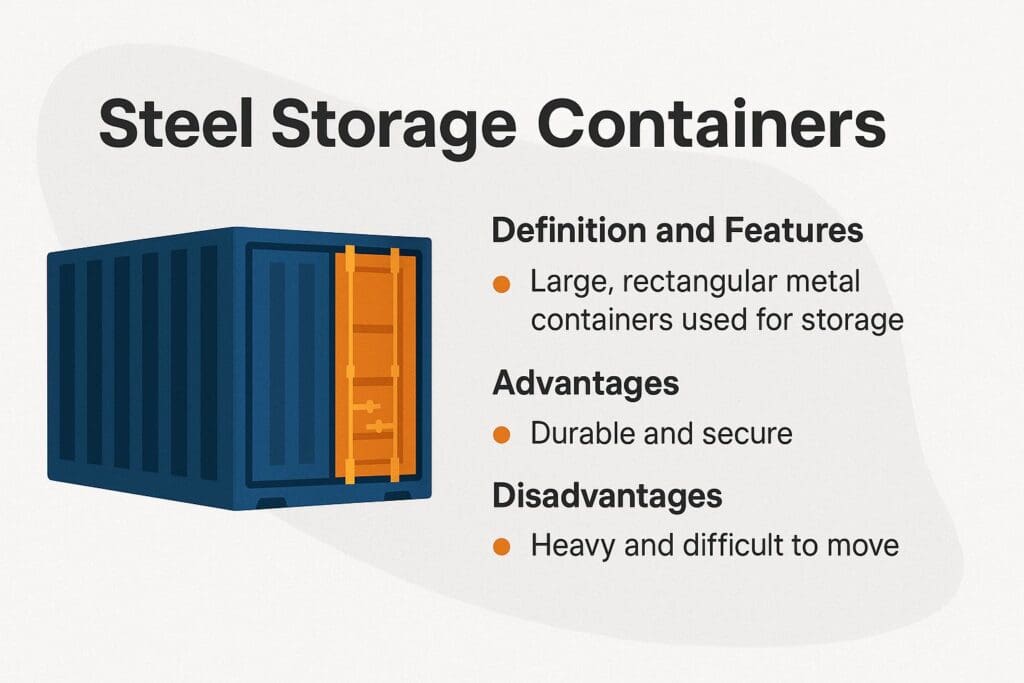
Steel storage containers are known for being strong, offering excellent protection and resistance to weather on construction sites.
Definition and Features
Steel storage containers are heavy-duty, weather-resistant units typically made from corrugated steel, offering features like lockable doors and customizable sizes.
These containers come in various dimensions, commonly ranging from 10 to 40 feet in length, allowing for flexibility depending on storage needs.
Many models include strong locking mechanisms-like padlocks or built-in locking systems-to provide security. These security features provide strong protection.
Custom modifications are also available, including ventilation options for climate-sensitive materials or shelving installations for organized storage. Custom containers can include additional features like pest resistance.
Consider containers with insulation features for temperature-sensitive goods. Container insulation is essential for keeping the temperature steady. Picking the right size, security options, and changes can greatly improve your storage solution, making it suitable for both home and industrial use. Curious about whether shipping containers are the best option for your secure storage needs? Our analysis provides valuable insights.
Advantages
Steel storage containers offer great strength, improved safety, and excellent protection from weather conditions.
These containers usually last more than 25 years, providing a budget-friendly long-term option.
Their security features, like strong locks and thick steel walls, prevent theft and vandalism, giving you confidence.
They are weather-resistant, ensuring your stored items remain safe from moisture, pests, and extreme temperatures.
For businesses in manufacturing or retail, containers can simplify tasks-think about turning them into portable workspaces or local storage areas.
By regularly checking and maintaining them, you can extend their lifespan and improve their performance, ensuring asset protection.
Durability and Security Features
Steel containers are built to withstand harsh weather conditions and have secure locks, making them ideal for construction sites where preventing theft is important.
Weather Resistance
Made from materials that resist rust, steel storage containers keep tools and construction equipment safe from rain, snow, and very hot or cold weather.
Disadvantages
Despite their many advantages, steel storage containers have notable disadvantages, including higher initial costs and potential challenges with mobility and transportability.
The starting cost of steel containers is between $1,500 and $5,000, which may be too high for small businesses.
Logistics complicate matters further; transporting these heavy containers often requires specialized equipment, which adds to both time and costs. Setting up steel containers at a site may necessitate permits or adjustments to local zoning laws, resulting in additional delays and expenses.
Therefore, businesses should weigh these factors carefully against their long-term storage needs to make an informed decision, considering both purchasing options and rental options.
Cost Considerations
The typical price for a steel storage container is between $1,500 and $5,000. This can strain construction budgets, but looking into rental options might lower initial costs.
Portability Issues
Moving steel containers is challenging because their heavy weight and large size need special machinery for transportation.
Other Storage Options
Besides steel containers, construction sites can use different storage options, including trailer storage, each having its own advantages and disadvantages.
Wooden Storage Units
Wooden storage units offer a natural aesthetic and lightweight alternative, but they come with their own set of challenges.
One major consideration is moisture; wood can warp or swell if exposed to water. To mitigate this, always use a sealant or finish, especially in humid environments.
Wooden storage units are often used in both residential and commercial settings-think shelving in a cozy caf or storage bins in a child’s bedroom. Opt for materials like plywood or solid oak for durability.
Adding dividers can improve organization, allowing you to find smaller items more easily and keeping things tidy, improving overall site organization.
Advantages
The main benefits of wooden storage units are that they are cheaper and easy to modify, which makes them perfect for short-term storage.
Disadvantages
Wooden storage units can decay, attract pests, and suffer from weather damage, often needing more upkeep than steel containers.
Plastic Storage Containers
Plastic storage containers provide a lightweight, often waterproof option, but their durability may not meet heavy-duty construction needs.
For lighter tasks, these containers can effectively organize tools and materials on site. For example, using stackable bins to sort screws, nails, and small tools can improve organization and site management.
In heavy-duty environments, consider alternatives like metal or rugged resin containers that resist impact and can bear higher weights. Brands like Rubbermaid and Husky offer options designed for construction, providing better longevity.
Assess your project’s specific requirements to choose the most suitable storage solution, balancing convenience against necessary durability.
Advantages
Plastic containers are generally lighter and cheaper, costing between $100 and $800. This makes them a good choice for short-term storage.
Disadvantages
The main problems with plastic storage containers are that they are weaker and can get damaged by sunlight, which makes them less effective as time passes.
Modular Storage Solutions
Modular storage solutions provide flexibility, allowing customized setups that can change to meet different site needs over time.
For instance, using stackable bins can help reorganize items as your inventory fluctuates. You might consider clear plastic bins for visibility or fabric ones for a softer look.
Adjustable shelving can easily shift heights based on the sizes of your stored items. When arranging your layout, it’s necessary to outline your space and keep walkways open, ensuring regulatory compliance.
Using tools like a laser level and space planning software can help set up your space, making it easier to change your storage when needed. For an extensive analysis of this trend, our comprehensive guide on creative shipping container modification ideas examines versatile solutions.
Advantages
The main benefits of modular storage are that it is easy to put together, can be adjusted to fit different needs, and allows for adding more space as project demands increase.
Disadvantages
Although modular storage systems are useful, they can be more expensive at first, so planning your budget carefully is important.
Comparative Analysis
A detailed review of storage choices shows important information about cost, effectiveness, and how well they fit different building site requirements.
Cost-Benefit Analysis
Examining the pros and cons shows that steel containers cost more initially, but their long-lasting durability and safety often make the expense worthwhile. Industrial reviews and container brands can help inform your decision.
For instance, a steel container may cost $3,000 initially but can last 25 years, whereas a lower-cost plastic option at $1,500 might only last 5 years. This makes steel containers an ideal solution for long-term storage.
Over time, the steel container’s average yearly cost is $120, compared to $300 for plastic, demonstrating better investment return. Steel containers offer better security, cutting down on theft and damage expenses, which can sometimes cost thousands each year.
When businesses invest in dependable products, they can reduce spending on replacements and keep their stored goods safe, justifying the initial expense.
Suitability for Different Construction Needs
To determine the right storage options, consider the construction needs like the size of the project, how long it will last, and the types of equipment needed. Evaluate the site’s constraints and space requirements to make the best use of the area.
For instance, a small renovation project might only need portable storage containers, which are affordable and can be delivered quickly.
In contrast, a large-scale construction site might benefit from on-site storage units that lock securely and withstand harsh weather.
Tools like Procore can help manage inventory and logistics, making sure you have the proper storage solutions in place, including shipping containers and stackable containers to improve site security and storage options.
By evaluating your project’s schedule and equipment needs, you can decide whether to rent equipment trailers or invest in a permanent shed. Consider aspects like temporary or onsite storage, changes to containers, and how well they work with your machinery to improve work and operations while following building codes and zoning rules. Look into various storage options and container features that make setup easier and allow for stacking.
Think about the environmental impact and sustainability to keep the job site cleaner, manage waste better, and use materials more efficiently. Assess customer feedback, industry norms, pricing compared to competitors, and delivery charges. Also consider insurance factors, energy-saving features, nearby vendors, and current market movements. Customization options and end-of-life disposal, along with recycling options, can contribute to reduced project costs. Carry out ROI analysis and review sites to find the best ways to keep containers in good condition, make them easy to access, and look good, while working well with equipment and improving the construction process.
About the Author
Written by Steve Holland, a Duke University graduate with a Master’s in Architecture. Steve is the owner of Tuff Shipping Containers, a leading container company based in North Carolina. With over 17 years of industry experience, he also serves as a contributing editor for the Tuff Shipping Containers Blog, where he shares expert insights on cold storage, custom builds, and industrial container solutions.
Leave a Reply